
Coconut Oil
Oil
The Verdict
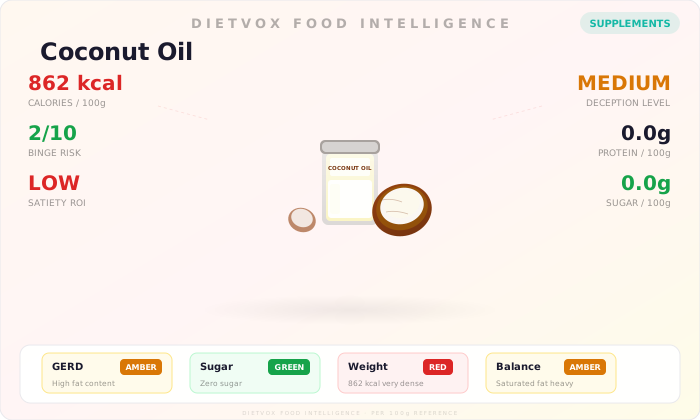
Coconut Oil is a very calorie-dense food driven primarily by its fat content (100.0g per 100g, of which 82.5g is saturated). At 862 kcal per 100g, portion control is critical for those managing caloric intake.
The Lab Report
Per 100g, Coconut Oil delivers 0g protein, 100.0g fat (82.5g saturated), and 0g carbohydrates with 0g dietary fibre.
The Safety Protocol
Saturated fat content (82.5g/100g) should be monitored within the context of daily limits (NHS recommends ≤20g/day for women, ≤30g/day for men). Tracking Tip: 1 tbsp (14g) = 121 kcal. Very high in saturated fat.
Scan your food to eat smarter with DietVox

 Scan to download
Protocol Ratings
Forensic Analysis
At 862 kcal/100g, this is a high-density energy source requiring careful portion control.
Poor satiety return. Low protein (0g) and fibre (0g) provide minimal fullness for the caloric cost.
Moderate tracking difficulty. Visual portion estimation may deviate by 15-25%.
Frequently Asked Questions
How many calories and carbs are in Coconut Oil?
Coconut Oil contains 862 kcal and 0g of carbohydrates per 100g.
DietVox Insight: DietVox rates Coconut Oil with a 'MEDIUM' Deception Level, meaning visual estimation is reasonably reliable for this food.
Is Coconut Oil good for weight loss?
At 862 kcal/100g, Coconut Oil is calorie-dense and requires portion control for weight management.
DietVox Insight: DietVox assigns a Binge Risk Factor of 2/10, suggesting manageable portion control.
Can I eat Coconut Oil with acid reflux?
Coconut Oil may trigger reflux in some individuals. Small portions and monitoring personal tolerance is recommended.
DietVox Insight: DietVox rates this AMBER for acid reflux, meaning individual tolerance varies. Keep a food diary to track your response.
Citations & Sources
- Nutritional composition data for Coconut Oil, per 100g serving. USDA FoodData Central
- Dietary supplement fact sheet for Coconut Oil. National Institutes of Health
Scan your food to eat smarter with DietVox
Scan to download