
Energy Drink
Soft Drinks
The Verdict
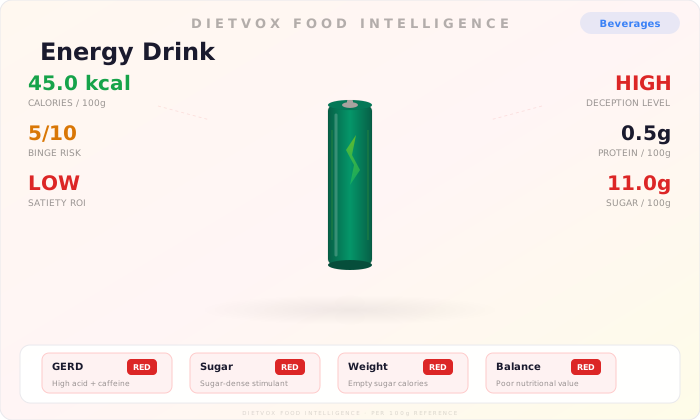
Energy Drink provides 45 kcal per 100g as a low calorie, low-fibre food. Its macronutrient profile shows 0.5g protein, 0g fat, and 11.0g carbohydrates.
The Lab Report
Per 100g, Energy Drink delivers 0.5g protein, 0g fat (0g saturated), and 11.0g carbohydrates with 0g dietary fibre. Of the carbohydrates, 11.0g are sugars. At 11.0g of sugar per 100g, moderate glycaemic impact is expected.
The Safety Protocol
High caffeine content (typically 30-32mg/100ml). Not recommended for children, pregnant women, or those sensitive to caffeine.
Scan your food to eat smarter with DietVox

 Scan to download
Protocol Ratings
Forensic Analysis
Low calorie density (45 kcal/100g) allows generous portions without significant caloric impact.
Poor satiety return. Low protein (0.5g) and fibre (0g) provide minimal fullness for the caloric cost.
High deception level makes accurate tracking challenging without a digital scale.
Frequently Asked Questions
How many calories and carbs are in Energy Drink?
Energy Drink contains 45 kcal and 11.0g of carbohydrates per 100g.
DietVox Insight: DietVox rates Energy Drink with a 'HIGH' Deception Level, meaning careful weighing is recommended for accurate tracking.
Is Energy Drink good for weight loss?
Yes, at 45 kcal/100g, Energy Drink is a low-calorie option that supports weight loss when part of a balanced diet.
DietVox Insight: DietVox rates the Satiety ROI as LOW, so pairing with protein or fibre sources enhances fullness.
Is Energy Drink bad for acid reflux?
Yes, Energy Drink is classified as a reflux trigger. It may relax the lower oesophageal sphincter or irritate the stomach lining.
DietVox Insight: DietVox Intelligence identifies this as a trigger food for the Acid Reflux protocol. Consider alternatives with a GREEN rating.
Citations & Sources
- Nutritional composition data for Energy Drink, per 100g serving. USDA FoodData Central
- High caffeine content (typically 30-32mg/100ml). Not recommended for children, pregnant women, or those sensitive to caffeine. NHS UK
Scan your food to eat smarter with DietVox
Scan to download