
Peanut Butter
Nut Butter
The Verdict
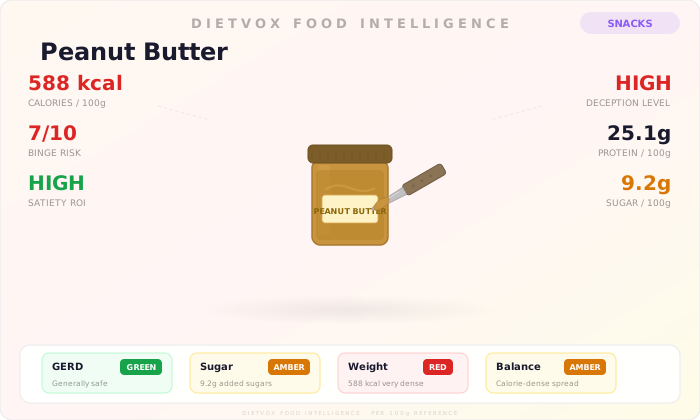
Peanut Butter is a very calorie-dense food driven primarily by its fat content (50.4g per 100g, of which 10.3g is saturated). At 588 kcal per 100g, portion control is critical for those managing caloric intake.
The Lab Report
Per 100g, Peanut Butter delivers 25.1g protein, 50.4g fat (10.3g saturated), and 20.0g carbohydrates with 6.0g dietary fibre. Of the carbohydrates, 9.2g are sugars. At 9.2g of sugar per 100g, moderate glycaemic impact is expected. Sodium content (459mg) is moderate and should be accounted for in daily intake tracking. Notable micronutrients include Potassium (649mg).
The Safety Protocol
Saturated fat content (10.3g/100g) should be monitored within the context of daily limits (NHS recommends ≤20g/day for women, ≤30g/day for men). Tracking Tip: Per 100g. 1 tbsp (16g) = 94 kcal. Choose no-added-sugar varieties.
Scan your food to eat smarter with DietVox

 Scan to download
Protocol Ratings
Forensic Analysis
At 588 kcal/100g, this is a high-density energy source requiring careful portion control.
Excellent fullness per calorie thanks to 25.1g protein and 6.0g fibre.
High deception level makes accurate tracking challenging without a digital scale.
Frequently Asked Questions
How many calories and carbs are in Peanut Butter?
Peanut Butter contains 588 kcal and 20.0g of carbohydrates per 100g.
DietVox Insight: DietVox rates Peanut Butter with a 'HIGH' Deception Level, meaning careful weighing is recommended for accurate tracking.
Is Peanut Butter good for weight loss?
At 588 kcal/100g, Peanut Butter is calorie-dense and requires portion control for weight management.
DietVox Insight: DietVox assigns a Binge Risk Factor of 7/10, indicating high overconsumption potential.
Is Peanut Butter a good source of protein?
Yes, Peanut Butter provides 25.1g of protein per 100g, making it an excellent protein source.
DietVox Insight: DietVox rates the Satiety ROI as HIGH. High-protein foods typically support appetite control and muscle maintenance.
Citations & Sources
- Nutritional composition data for Peanut Butter, per 100g serving. USDA FoodData Central
Scan your food to eat smarter with DietVox
Scan to download